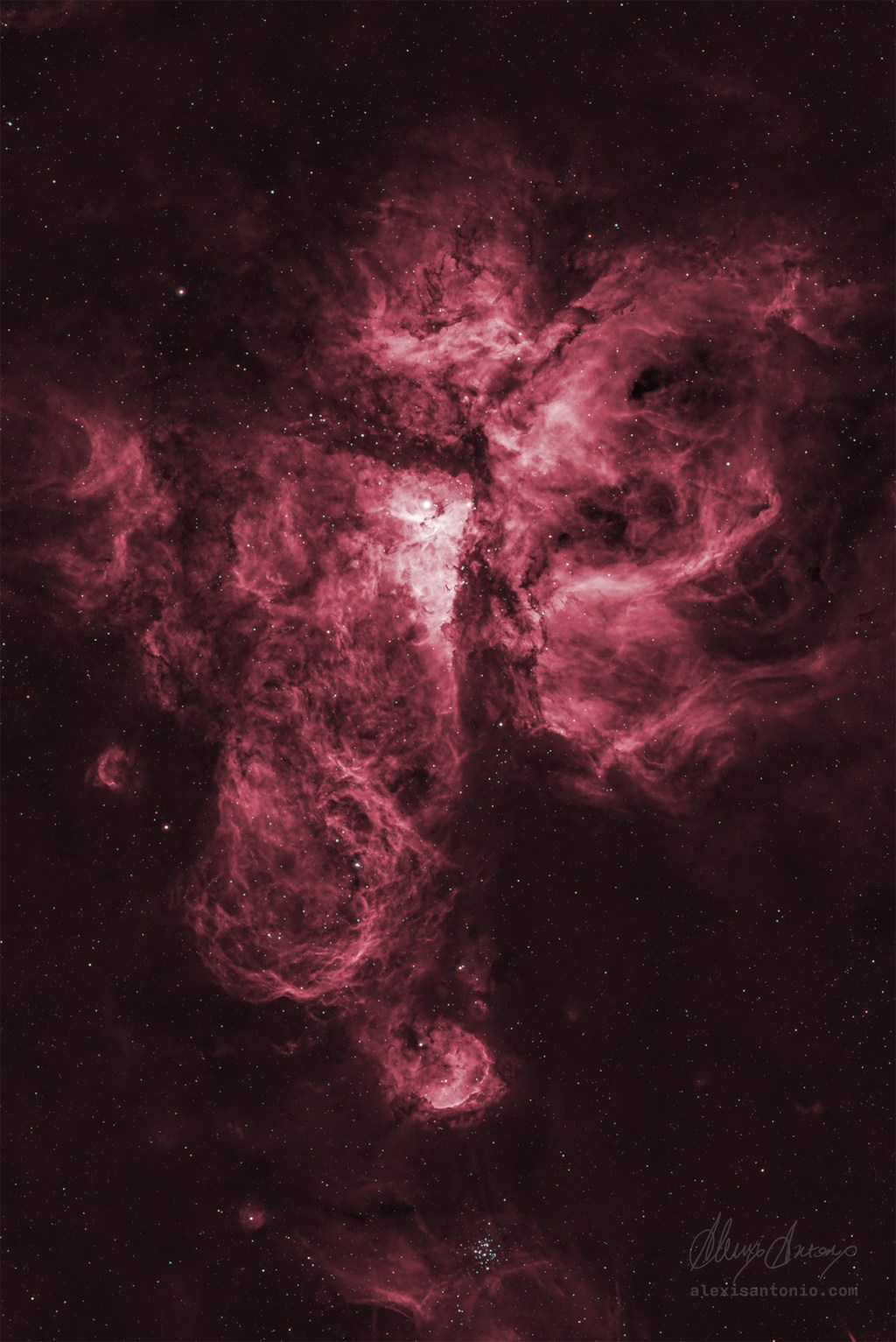
The Great Carina Nebula (NGC 3372), home to the massive and unstable Eta Carinae system, is one of the largest and brightest emission nebulae in the Milky Way. Spanning nearly two degrees of sky and located roughly 7,500–8,500 light‑years away in the constellation Carina, it is a Southern Hemisphere showpiece rarely accessible from northern latitudes.
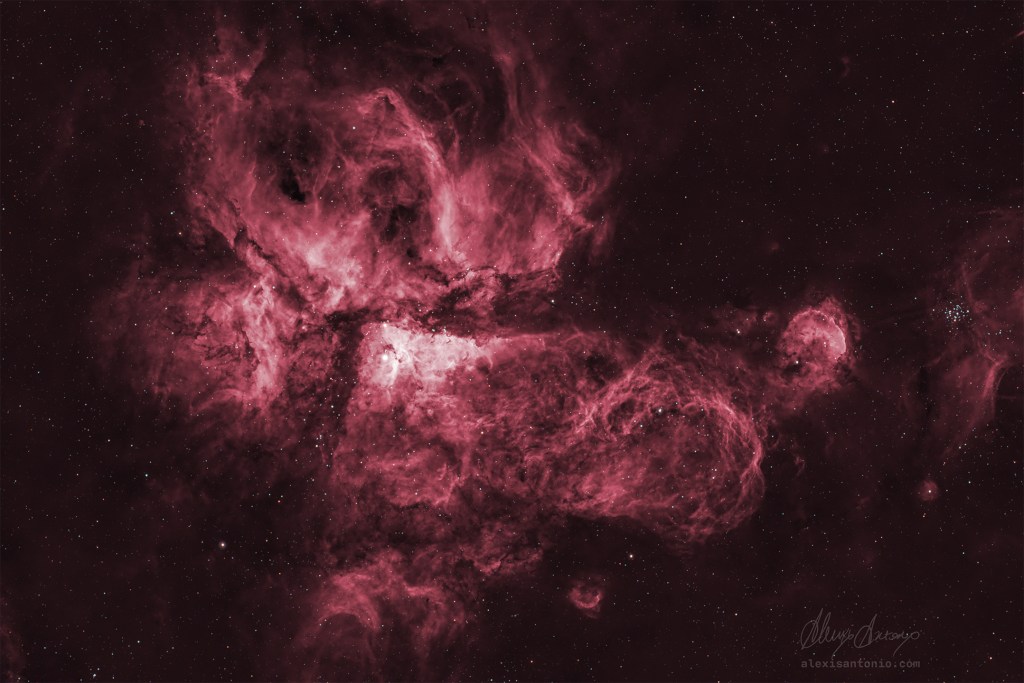
Target Data
- Name: Eta Carinae, Keyhole, Carina Nebula
- Catalog Entries: NGC3372
- Constellation: Carina
- Hemisphere: South, well south of the celestial equator; best viewed from the Southern Hemisphere
- Distance to Earth: 7,500–8,500 light‑years
- Object Type: Emission Nebula
- Approx Ideal FOV: About 2 degrees across
Image Acquisition
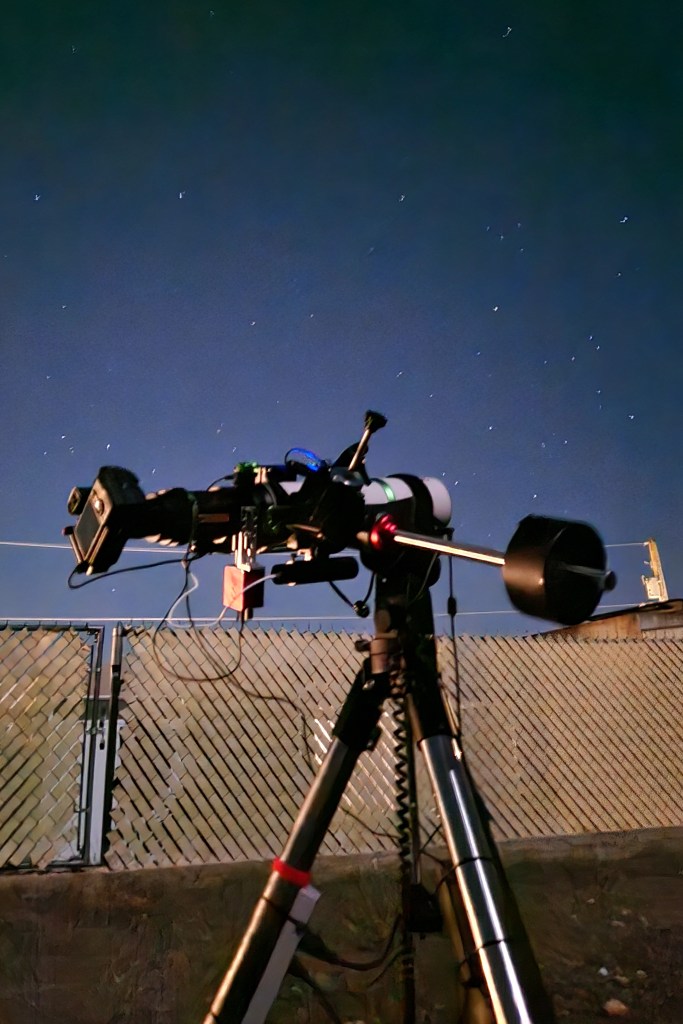
This image was captured exclusively using narrowband filters, which was essential given the extreme low altitude of the Carina Nebula from north Puerto Rico. At transit the target reached only about 11° above the horizon, forcing me to shoot through a very thick column of atmosphere and significant light extinction. Narrowband imaging—especially H‑alpha—allowed me to cut through the atmospheric scattering and isolate the strong emission lines that dominate this nebula.
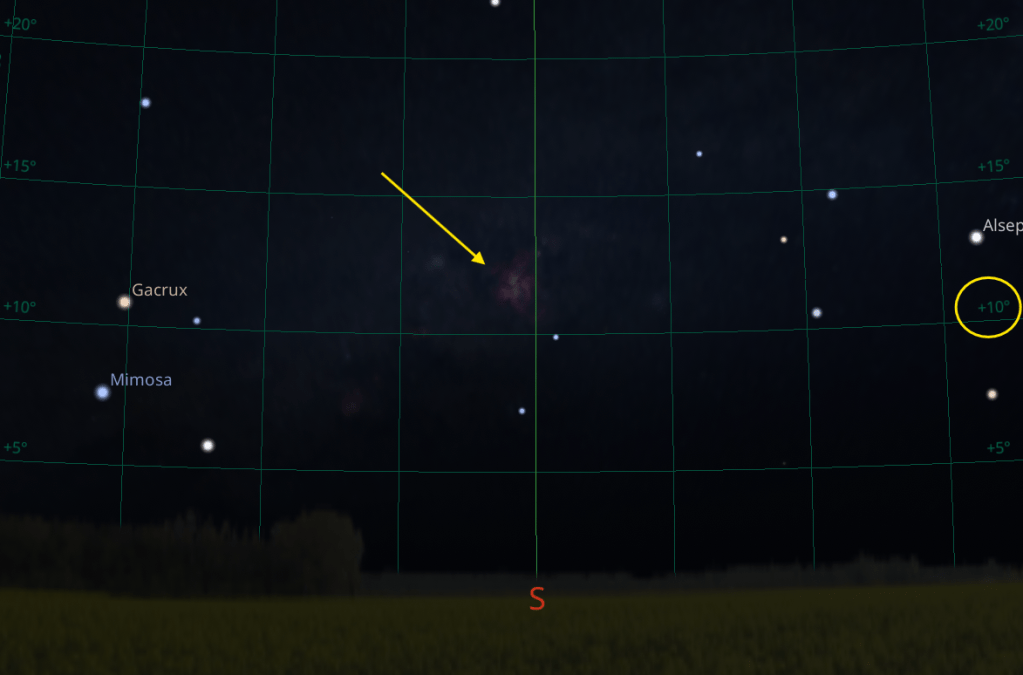
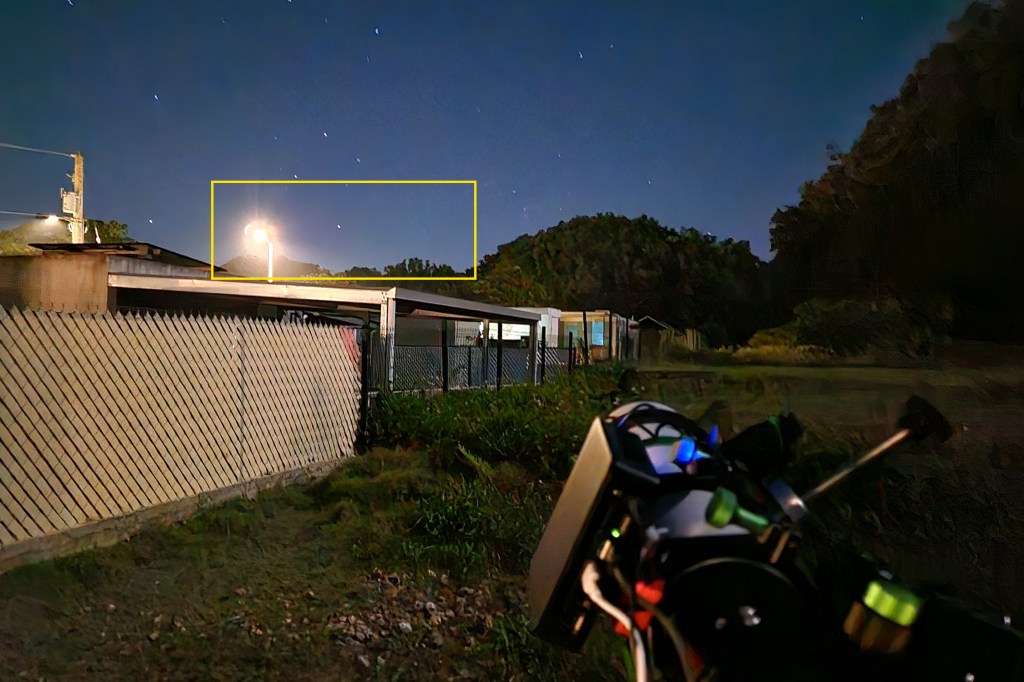
The Cordillera Central mountains blocked roughly one‑third of my southern horizon, leaving me with just under two hours each night to collect data, and during that narrow window I also had to contend with light poles occasionally drifting into the field of view and heavy local light pollution from nearby homes due to the nebula’s low altitude. All of these factors made every minute of narrowband exposure count.
Why Narrowband?
- H‑alpha dominates the Carina Nebula, especially around the Keyhole region and the massive star‑forming pillars.
- Low-altitude imaging amplifies skyglow, humidity, and extinction, all of which narrowband filters suppress far better than broadband.
- OIII and SII remain usable even at 11°, though OIII suffers more from atmospheric scattering.
- Narrowband makes southern targets accessible from northern latitudes, letting you reveal structure that would be impossible in RGB alone.
📷 Imaging Gear
- Camera: Sony A7III Mirrorless Camera (Full Spectrum)
- Filters: Antlia 5nm Duo Narrowband (Hα/OIII)
- Telescope: Askar 80PHQ
- Mount: iOptron GEM28 EC
- Guide Camera: iOptron iGuider
🗓️ Acquisition Stats
- Total Integration Time: 3.7 hours
- Subframes:
- Hα/OIII filter: 10 × 120s, 24 x 300s, 31 x 180s
- Gain/ISO: 640
- Sensor Temperature: 17C-21C
- Bortle Scale: Class 5 (Suburban Sky)
- Data Source: Backyard (Florida, Puerto Rico)
- Capture Software: NINA (Nighttime Imaging ‘N’ Astronomy)
- Guiding Software: PHD2
🛠️ Processing Software
- Calibration & Stacking: Siril, Sirilic
- Noise Reduction: Graxpert, Cosmic Clarity
- Star Removal: StarNet++
- Post Processing: Photoshop
 alexisantonio.com
Leave a comment