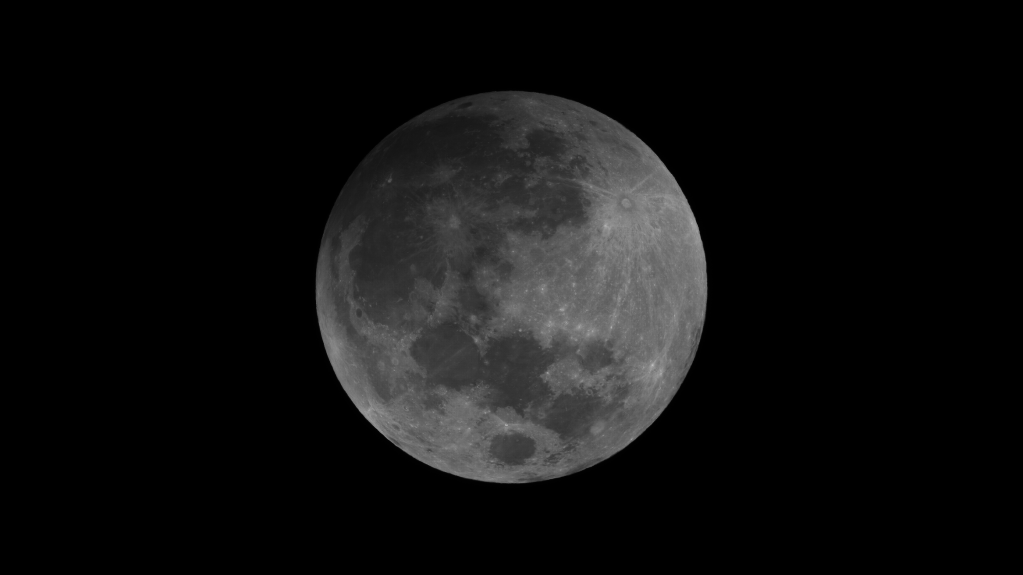
The March 2026 lunar eclipse offered one of those rare nights where everything comes together—clear skies, steady seeing, and the anticipation of watching the Moon slowly slip into Earth’s shadow. My goal was to capture a full timelapse of the event, from the bright full Moon all the way into the deep red of totality. What I ended up with was something a little different, but still striking: a crisp, dramatic sequence showing the Moon fading from full brightness into complete darkness.
Even though the timelapse ends just before the blood‑moon phase, the journey to that point was worth sharing—both for the visuals and for what I learned along the way.
The Setup and the Last‑Minute Change
My original plan was to use the Sony A7III in aperture‑priority auto‑exposure mode, letting the camera manage the brightness drop as the eclipse progressed. For a multi‑hour event where the Moon’s brightness drops by several stops, AE is incredibly helpful. It handles the exposure ramp smoothly and lets you focus on framing.
But I ran into a guiding problem. I was using an off‑axis guider paired with an ASI220MM Mini, and the field of view difference between the Sony and the guide camera was so extreme that the Moon couldn’t appear on both sensors at the same time. If the Moon was centered for the Sony, it was nowhere to be found on the guider—and without guiding, the framing would drift over the hours.
That forced a last‑minute change. I switched to the ASI2600MC Pro, and that immediately solved the guiding issue because FireCapture can guide using the same camera that’s doing the imaging. With the ASI2600, I no longer needed the off‑axis guider at all; the camera itself handled both imaging and lunar guiding simultaneously.
The tradeoff was exposure control. FireCapture can’t control the Sony due to the lack of native drivers, but it also can’t auto‑expose the ASI2600 through the full brightness drop of an eclipse. So while guiding became rock‑solid, exposure ramping wasn’t possible—and the timelapse fades to black right before totality.
The Result: A Beautiful Fade Into Darkness
Despite the exposure limitations, the timelapse turned out visually compelling. The Moon stays sharp and detailed through the bright and partial phases, and the transition into darkness is dramatic—almost creepy in its own way—when compressed into a 15‑second vertical sequence.
Right before the Moon enters the deep umbra, the exposure curve becomes too steep for the fixed settings, and the frame goes dark. That’s where the timelapse ends.
It’s not the full eclipse, but it captures a moment of real beauty: the Moon disappearing into shadow with crisp detail and smooth motion.
What I Learned During the Capture
This eclipse highlighted how delicate the balance is between guiding, framing, and exposure automation:
- Auto‑exposure is essential for a smooth, multi‑hour eclipse timelapse.
- The brightness drop near totality is faster than expected, and manual exposure adjustments aren’t practical when you’re also managing guiding.
- PIPP software is excellent at stabilizing and centering the Moon, even if the framing drifts during capture.
These lessons shaped a much clearer plan for next time.
What I’ll Do Differently Next Time
Next time, I’ll run the Sony A7III without guiding. I can periodically re‑center the Moon using mount control software, then let PIPP stabilize the entire sequence afterward. That gives me the Sony’s excellent auto‑exposure without relying on an off‑axis guider that can’t share the same field of view.
It’s a simpler workflow, and for an event with such extreme brightness changes, simplicity is an advantage.
Closing Thoughts
Even though this timelapse doesn’t include the blood‑moon phase, it captures something equally compelling: the Moon’s slow disappearance into shadow, rendered in crisp detail. Astrophotography isn’t just about perfect results—it’s about the process, the problem‑solving, and the story behind each image.
 alexisantonio.com
Leave a comment