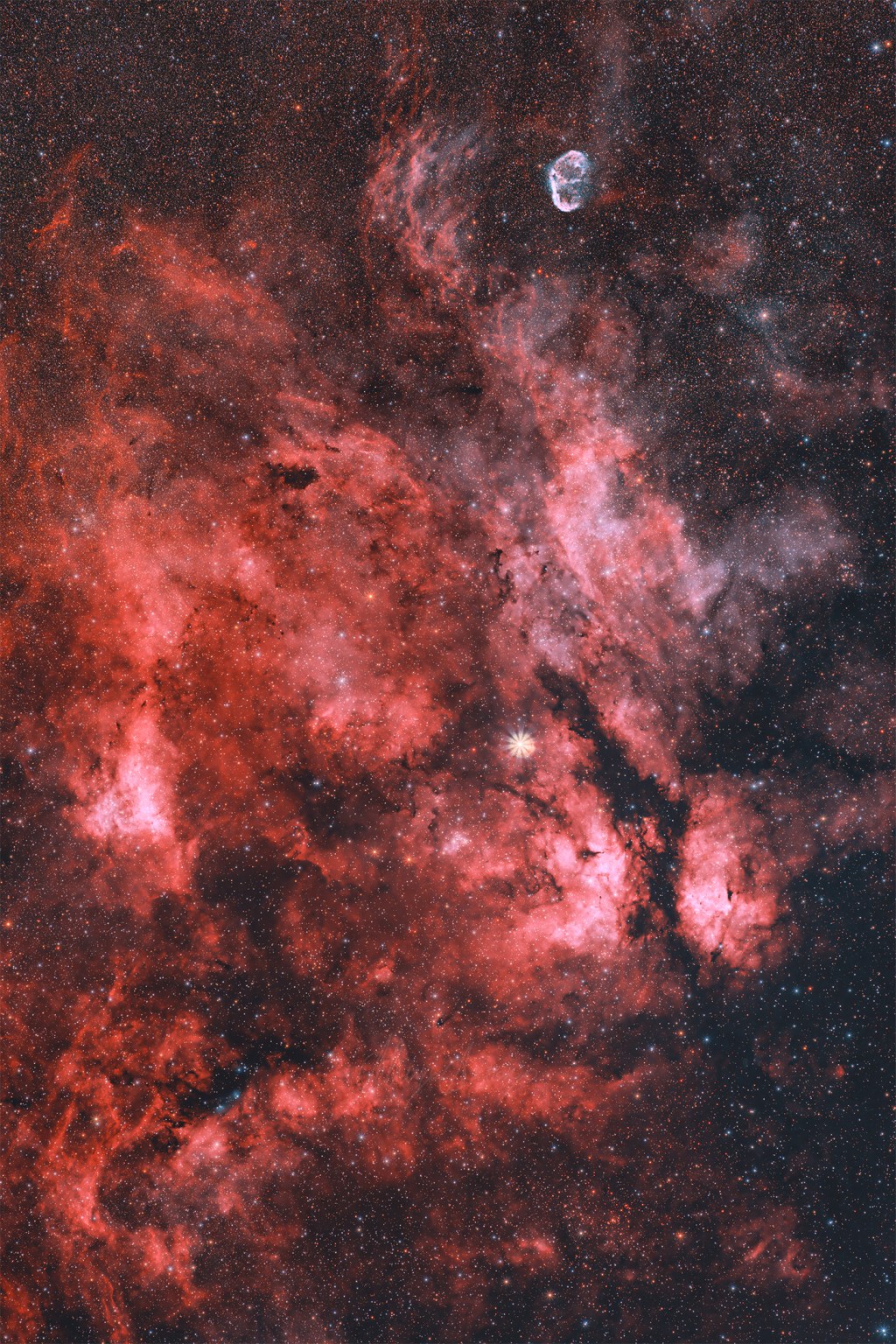
The Sadr Region (IC 1318) lies near the bright supergiant star Gamma Cygni (Sadr) in the heart of the Cygnus constellation and is part of a large array of nebulae’s that are part of the Milky Way arch that reaches the northern latitudes. It is a diffuse emission nebula filled with ionized hydrogen (H-Alpha) gas, dark dust lanes and filaments that is triggered by UV light from nearby hot stars.
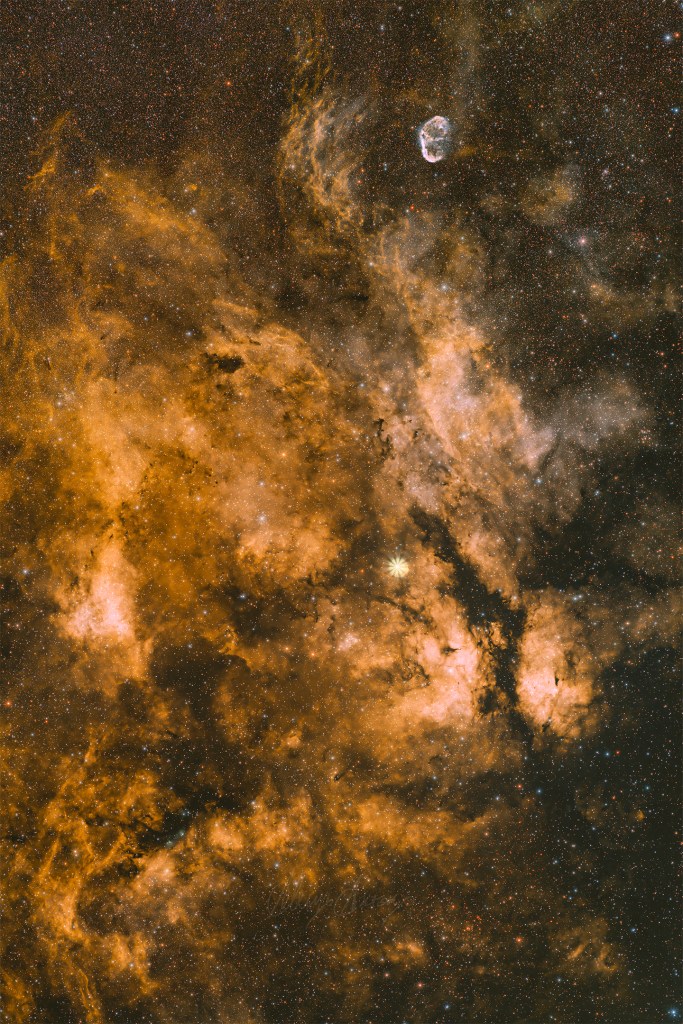
On the following images you will also find the Crescent Nebula (NGC 6888 / Caldwell 27) which looks like a bubble-like shell. It was formed by the stellar wind from the Wolf-Rayet star WR 136, colliding with material ejected during its red giant phase about 250,000 years ago.
Target Data
- Name: Sadr Region
- Catalog Entries: IC 1318
- Constellation: Cygnus
- Hemisphere: North of celestial equator
- Distance to Earth: Between 2,000 to 5,000 light years away
- Object Type: Emission Nebula
- Approx Ideal FOV: 3º+ (wide field target)
Image Acquisition
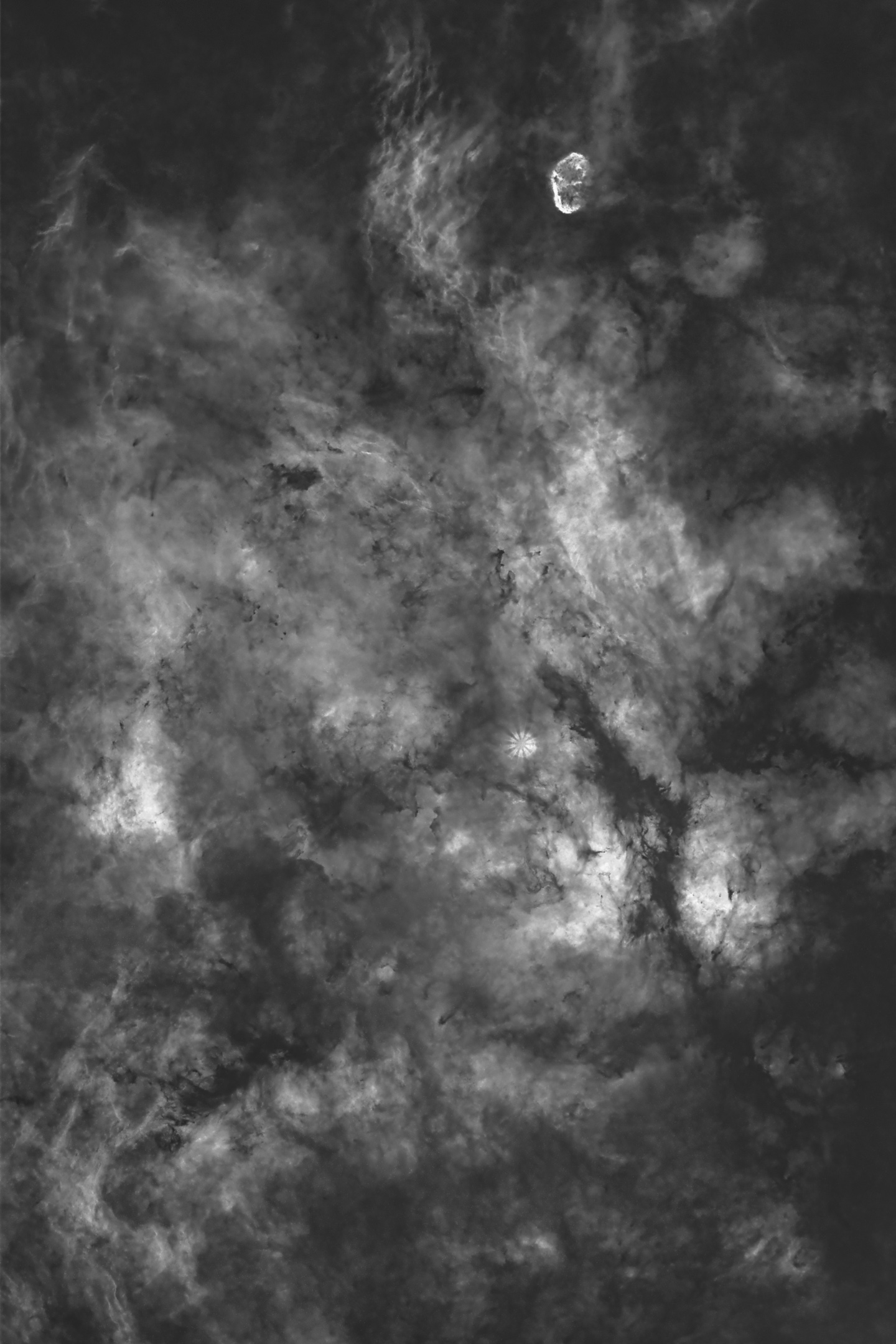
To capture this image, I stacked and processed two sets of multiple night sessions; one with RGB data using an LPS quad band filter and the other set with Ha/OIII data using a dual narrowband filter. I used Photoshop to blend the Ha and OIII monochrome images with the RGB image, more details below.
- Camera: ZWO ASI2600MC Pro
- Telescope/Lens: Askar ACL200
- Mount: iOptron GEM28 EC
- Filters: SVBony SV220 Dual Narrowband, Antlia Quad Band
- Image Scale: 3.88″
- FOV: 6.73º
- Integration Time: 8hrs Narrowband, 12hrs Multiband
- Capture Dates: Jun 22 – Jul 4, 2025
- Bortle Scale: Bortle 6, Bright Suburban Sky
- Aquisition Software: NINA, PHD2
- Processing Software: Siril, Sirilic, GraXpert, Cosmic Clarity and Photoshop.


 alexisantonio.com
Leave a comment